While preparing for a major repair project to our bank barn, we joined the Friends of Ohio Barns and learned so much more about barns and agricultural history than we could ever have imagined possible. We learned, with the help of the Wayne County Historical Society, that our farm had originally been deeded as a quarter section (160 acres) of land in 1824 by James Monroe to a ‘flipper’, who, with his family, bought and sold many such tracts before moving on west. A family named Bruce held the property for over 50 years, developing the farm and buildings. Jim’s great-grandparents moved up from Holmes County and bought the property in 1917 from Sidney Fryer, who built the barn in 1910 during his brief period of ownership. It was sold in 1965 to an investor, who expanded the dairy operation and then sold it to Jim in 1975. After we stopped farming, 120 acres were sold to a neighbor, and we rented the remaining 40 to a grain farmer.
Histories of early Wayne County, particularly Plain and Clinton Townships, mention early farmers finding some surprising artifacts as they drained the swampy patches adjacent to the Killbruck Marsh, specifically, bison skulls, and human remains of ‘remarkable size’. Not remarkable in the area at all, we often found arrow tips in the fields in the spring. The farm has hilly, gravelly areas with numerous springs in the banks, and at least two artesian wells. While tiling out a wet spot, an earlier attempt at drying out the area was revealed in layers of sandstones stacked along the drainage area to carry away the spring. The farm supported several oil and gas wells through the years, a common feature in Wayne County.
In 2023, for a number of reasons, among them the notion that it would be nice to return the property to something similar to its 1824 condition, we placed our field in a Conservation Reserve Program, the Monarch SAFE (State Acres for Wildlife Enhancement) Initiative. The various SAFE programs are federal and state cooperative conservation projects whose aim is to restore habitats for wildlife.
The shocking decline of insects in the past 30 years alone is attributable to vast tracts of habitat loss, to the extent that monarch butterflies are nearly an endangered species. We planted a selection of wildflowers and grasses, as well as flowering shrubs and trees, to help provide a safe place for insects, birds, and little mammals, and, incidentally, provide high-quality forage for our honey bees.
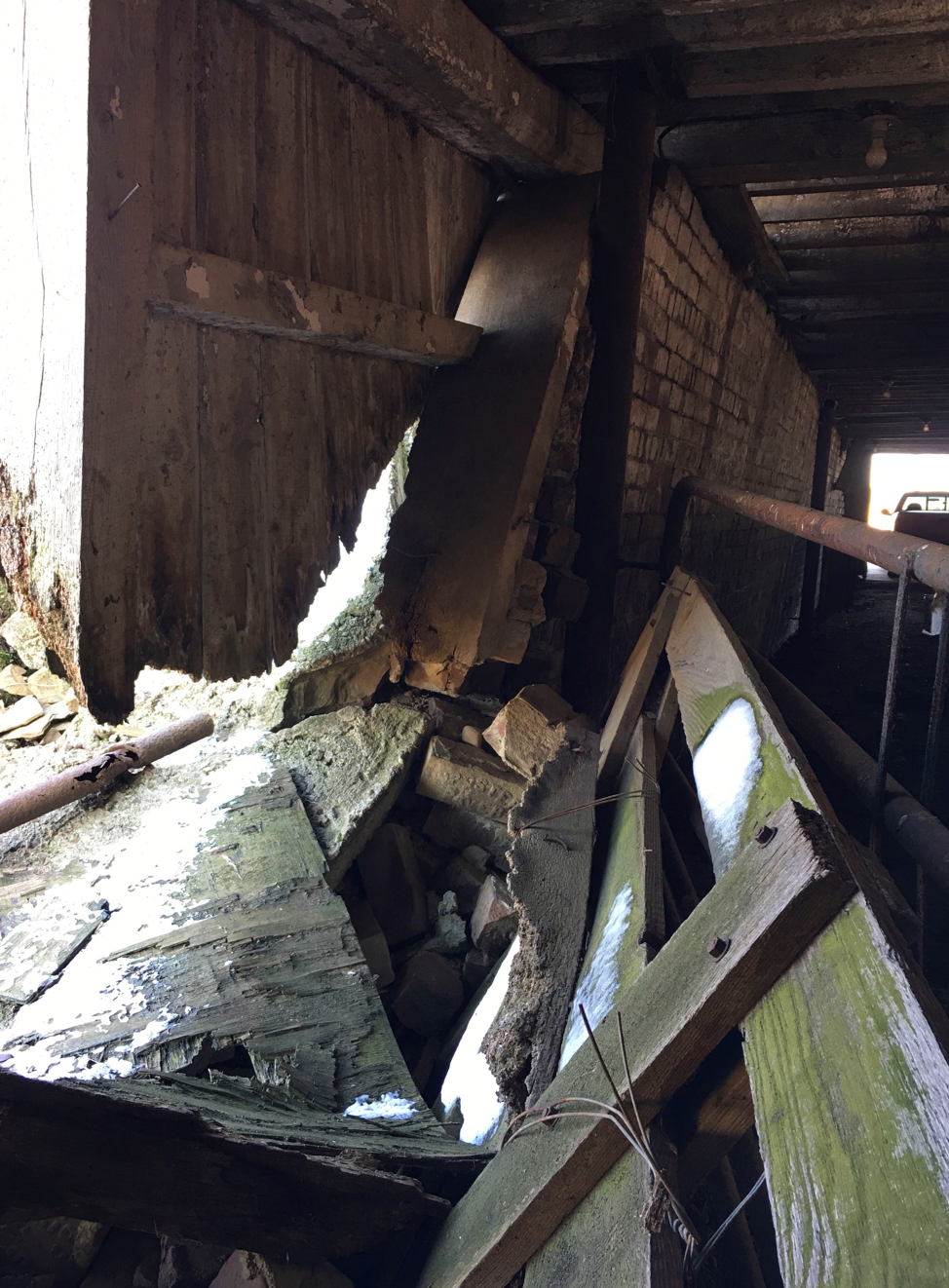
Photo of the bank wall on the west end, caving in
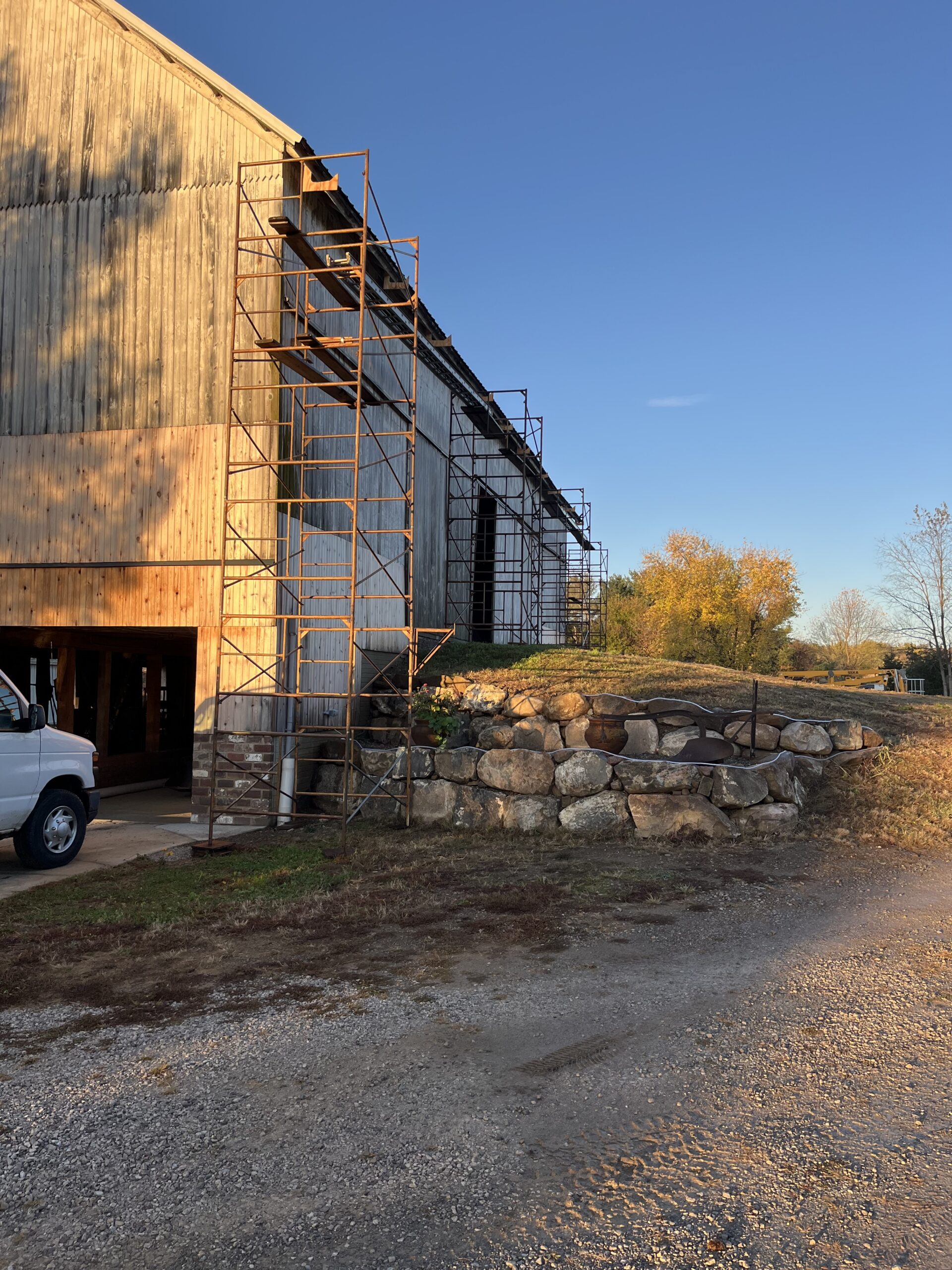
Scaffolding used during the barn repairs
The barn repair project finally began in 2024. The bank barn was lifted, straightened to correct a truly scary lean, its bank wall (after collapsing inward) repaired, and many of the structural timbers in the basement replaced. The 1970’s dairy building, which we had remodeled for farrowing sows, was attached to one corner of the bank barn, and it was demolished to return the bank barn to its original form. The project continues….
The state of the bank wall now, repaired!
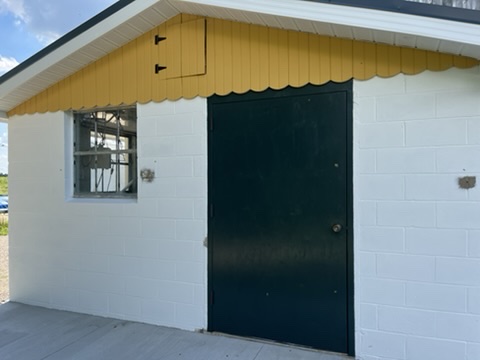
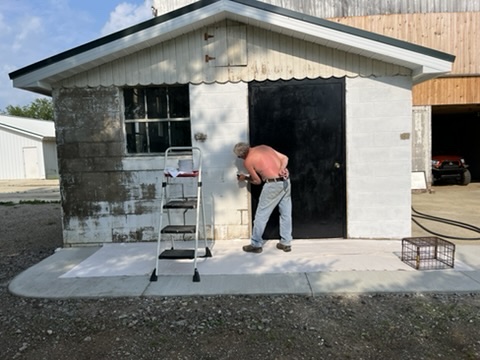
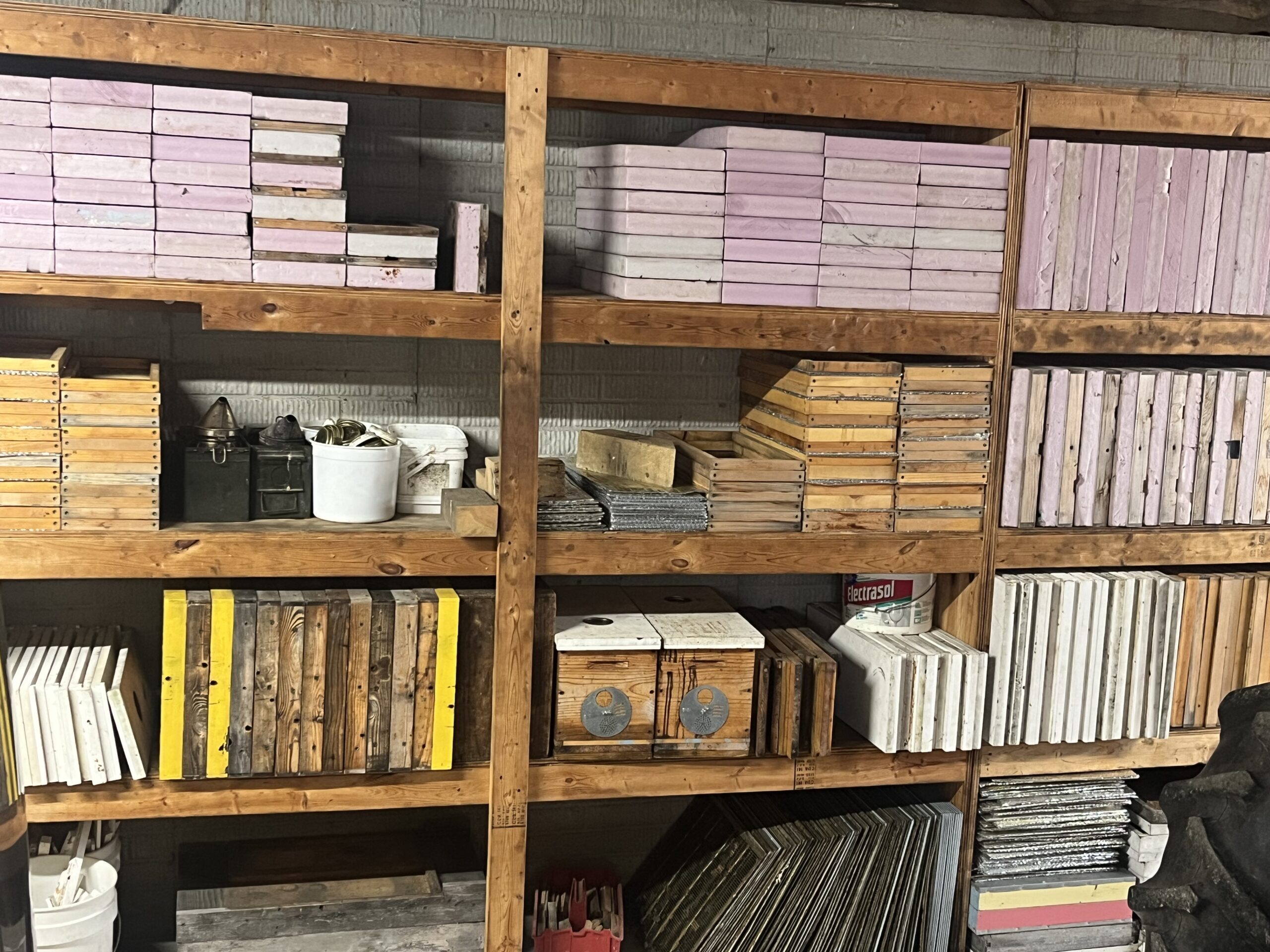
The outside of the newly renovated Honey House