
What equipment for beekeeping do you need to get started? Before even thinking about equipment, ask yourself why you think keeping bees is a good idea, and do consider your neighbors. Also, some cities, including Wooster, frown on their residents keeping bees. And you will need at least $500 to spend on this hobby.
One of the first pieces of beekeeping equipment you’ll need is boxes to put the bees in. What size and conformation is totally up to you. Expect to have 2 deep boxes for the bees and at least one medium for honey. A full deep hive body weighs up to 80 pounds, and the smaller boxes for honey (typically, mediums) weigh at least 40 pounds when full, so size is a consideration if you have issues lifting. An 8-frame box is just enough lighter without cramping the bees’ style, something to consider. A stack of mediums works, but you’ll need more levels. Shallow honey frames are another option.
Before installing bees in the box it is important to finish the wood, if you went with wooden boxes. We save a little by making our boxes from utility grade pine, which is soft and porous and rots easily, so to make them last, they get dipped in hot wax. Paint is fun, too, if you have good wood.
You will need frames with foundation for the bees to draw into comb. Our first frames were wooden with sheets of wax foundation wired in. They were great! Until wax moths destroyed them. This was a newbie mistake, letting unguarded frames out in the summer. Now we use all plastic frames which we coat with melted beeswax. I like them a lot because they are lighter and slightly thinner so it is easier to wrangle them in the box. They also stand up to the honey extractor better. But, again, a personal choice. Whatever the frame, if you choose a plastic foundation, be sure it has a good coating of beeswax, either from you or the factory. Otherwise, the bees won’t draw comb.
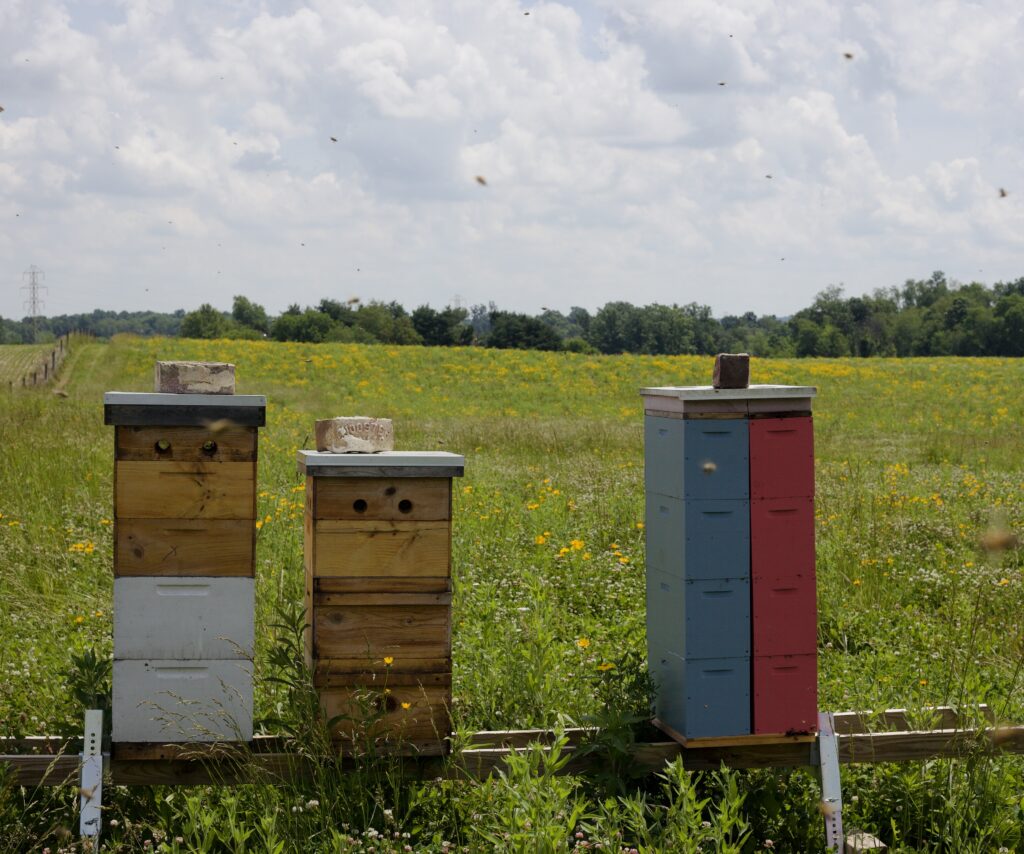
We use 10 frame deeps, a solid bottom board, a piece of reflective bubble wrap as an inner cover, a migratory lid with a hole cut to hold a regular canning jar lid, and when we feed solid food, a shim, and in the winter, a piece of 2” Styrofoam under the lid. We use queen excluders to keep brood out of our honey boxes, but there is an art to using them and they can be problematic until you figure them out. Inner covers are helpful for giving big colonies a second, upper entrance, but their role in hive ventilation is controversial. At a certain point, what will matter most is how many things to you need to haul out to the beeyard, will you have enough frames of the right size, and where are you going to put it all when it isn’t in use.
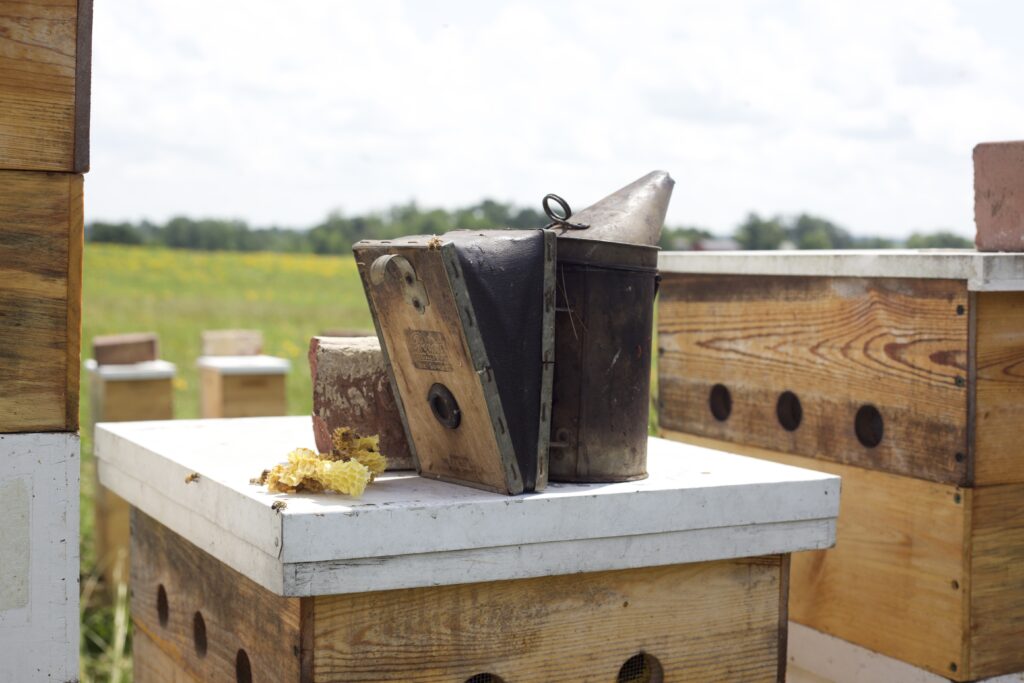
Another piece of beekeeping equipment you should have is a smoker to alert the bees when you invade their space. Smoke should be used sparingly, and if a colony has gone postal, smoke won’t help at all. Keeping a smoker going is an art. Start with paper or pine straw, include slow-burning fuel like a rag or burlap, a chunk of wood, toss in something vile like grass clippings, and be patient when getting it going. We have a small arsenal of very old smokers from second-hand stores which work well, but our favorite is a Dadant, large size with a screen around the fire box so you can hold it without getting singed.
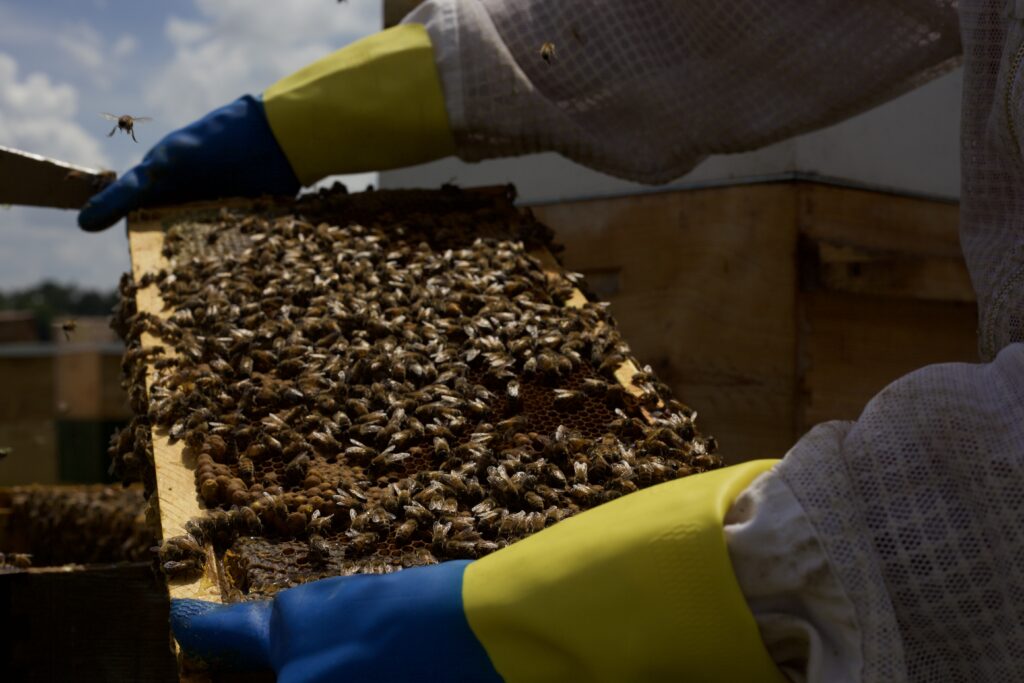
Definitely get a veil to protect your face, at the very least, and probably a full suit until you’re comfortable with being buzzed. We have mesh jackets and suits, and I would highly recommend mesh over woven cotton. It’s cooler, and bees cannot penetrate the multiple layers. My first suit, which was woven, had snazzy black trim, and because it was too big, I held it up with a black belt. I didn’t understand why bees stung all along the trim and my waist until I learned they don’t like black.
Gloves are a sensitive topic. Face the fact that you will get stung, and the discomfort will become no worse than the shock of putting hot sauce on your eggs. I started with leather, but soon moved to a thick latex, a size too big so the stings weren’t in direct contact with my skin. This year I decided I hate sweaty hands more than stings, so I mostly don’t wear gloves, but it is all about what you’re a comfortable with. Don’t let the old-timers in the bee club embarrass you into something you don’t want to do!
A hive tool that won’t hide from you is a gem. There are tools with and without a J-hook, flat or bent ends, and there are merits to them all. My go-to has a bent end with a hook, and at the blade end, a shallow incline so it also separates boxes easily without doing too much harm to the corners. Hooks can damage frames when they are used for prying stubborn frames, so I prefer to use the blade to dislodge frames and the hook only when needed. I like to sharpen the blade from time to time. I have found that a stainless scrubby, Dawn, and hot water work well to clean tools, but I kind of like mine dirty, just scraping off the worst of the gunk. Get in the habit of holding the hive tool all the time, because they will run off.
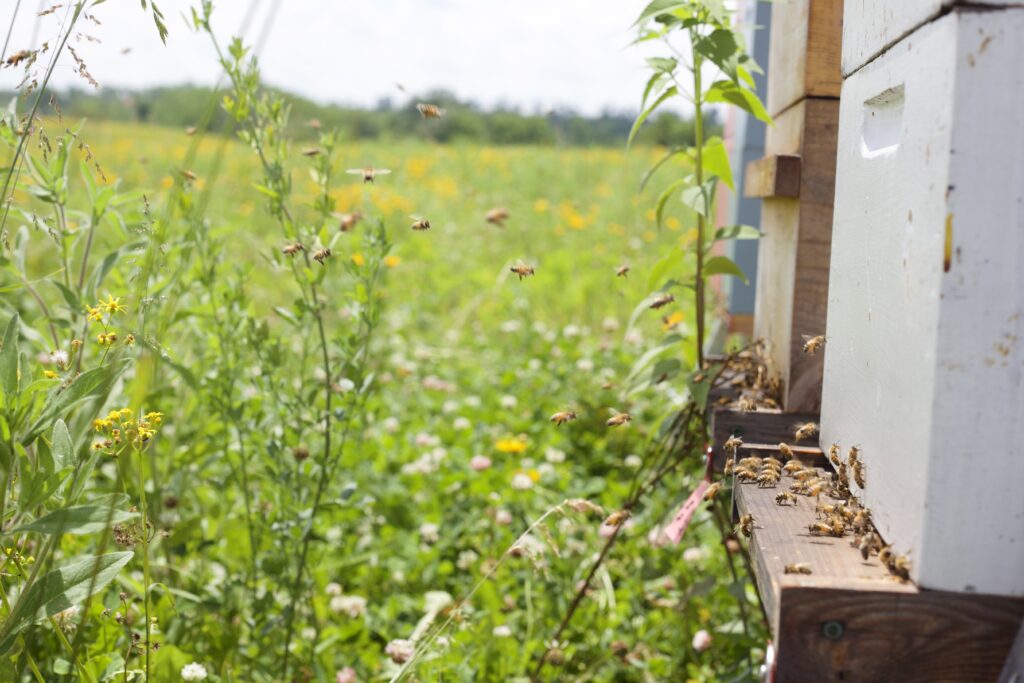
So, after the boxes, smoker, suit, and hive tool, you will need a way of feeding your bees syrup. My last choice would be a large yellow feeder on the front, which can incite a robbing riot during a dearth, and is easily dislodged by raccoons. Pint jar feeders at the entrance are good, easy to fill and obvious when empty, but because they are small they require more visits. Next up would be a top inside feeder, which works well, but can be quite wasteful, and tricky to fill and a bother to tell when empty. Then, a frame or in-hive feeder. Again, works well, but holds a lot of syrup and is not fun to fill, and you can’t tell if it is empty without opening the hive. Finally, my choice, a top feeder, whether jar or bucket. Minimal risk of robbing, its full status easy to pick out, easy to fill, good use for old canning jars, just easy.
Like it or not, figure out how to kill varroa mites in your first summer, or you won’t have a second summer with the same bees.
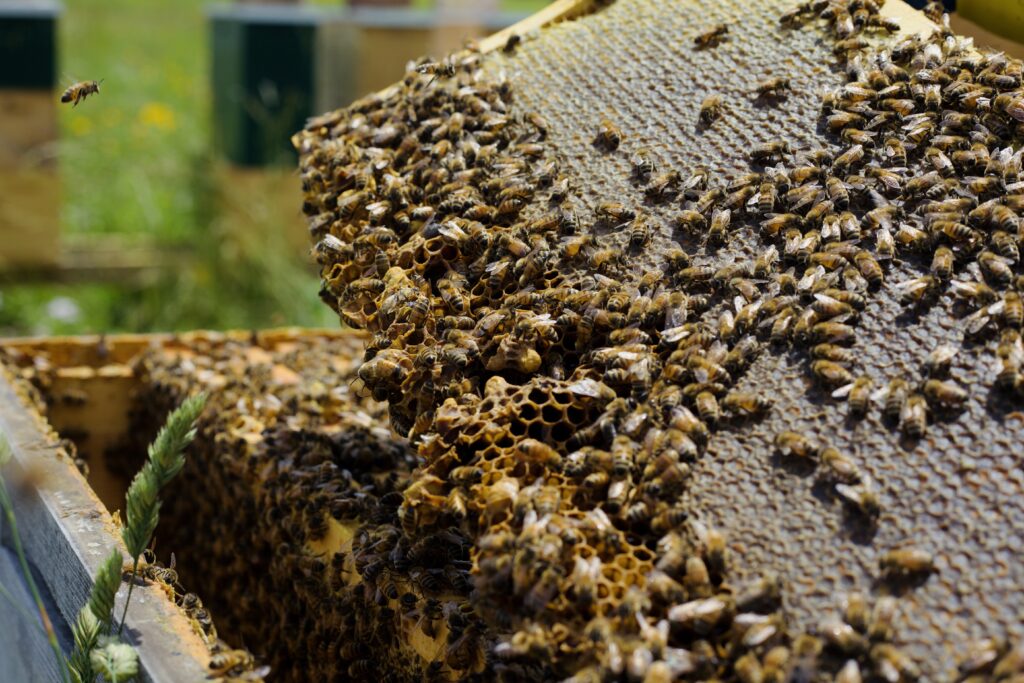
You will need bees! Packages are ok for starters, probably the least expensive and easiest to manage, but they don’t always succeed. The colony is brand new and doesn’t have a good contingent of nurse bees to tend the queen and new brood, and packages have a high rate of queen supersedure.
Watch a video of packages being made! A nucleus colony is a better option, though slightly more expensive. Whether overwintered from the previous year or made in the spring, it is a young queen with her own offspring, proven and ready to go. But go they will, if you don’t give them space to expand before they swarm. If you are lucky, catching a swarm is the perfect way to get bees. The queen will be mature and the workers hard-wired to draw comb and launch a new colony. And because they are free, if things don’t work out it won’t be as upsetting.
Finally, the state of Ohio requires all beekeepers to register their hives with the Ohio Department of Agriculture. Registration is free unless you sell queens.
Read all you can, find experienced and patient mentors, watch YouTube, be comfortable with failures and mistakes, and on a summer evening, just at sunset, take time to enjoy the hum. If you’d like to purchase a honey bee nucleus colony from us, visit the link below.
All photos in this post are courtesy of Annie Yoder [email protected] of Local Roots in Wooster, OH